
DMX Core is built to fit into the installations you already run. It talks natively to pixel controllers, audio DSPs, control surfaces, and building I/O — so lighting becomes one more coordinated part of the room, not a silo.
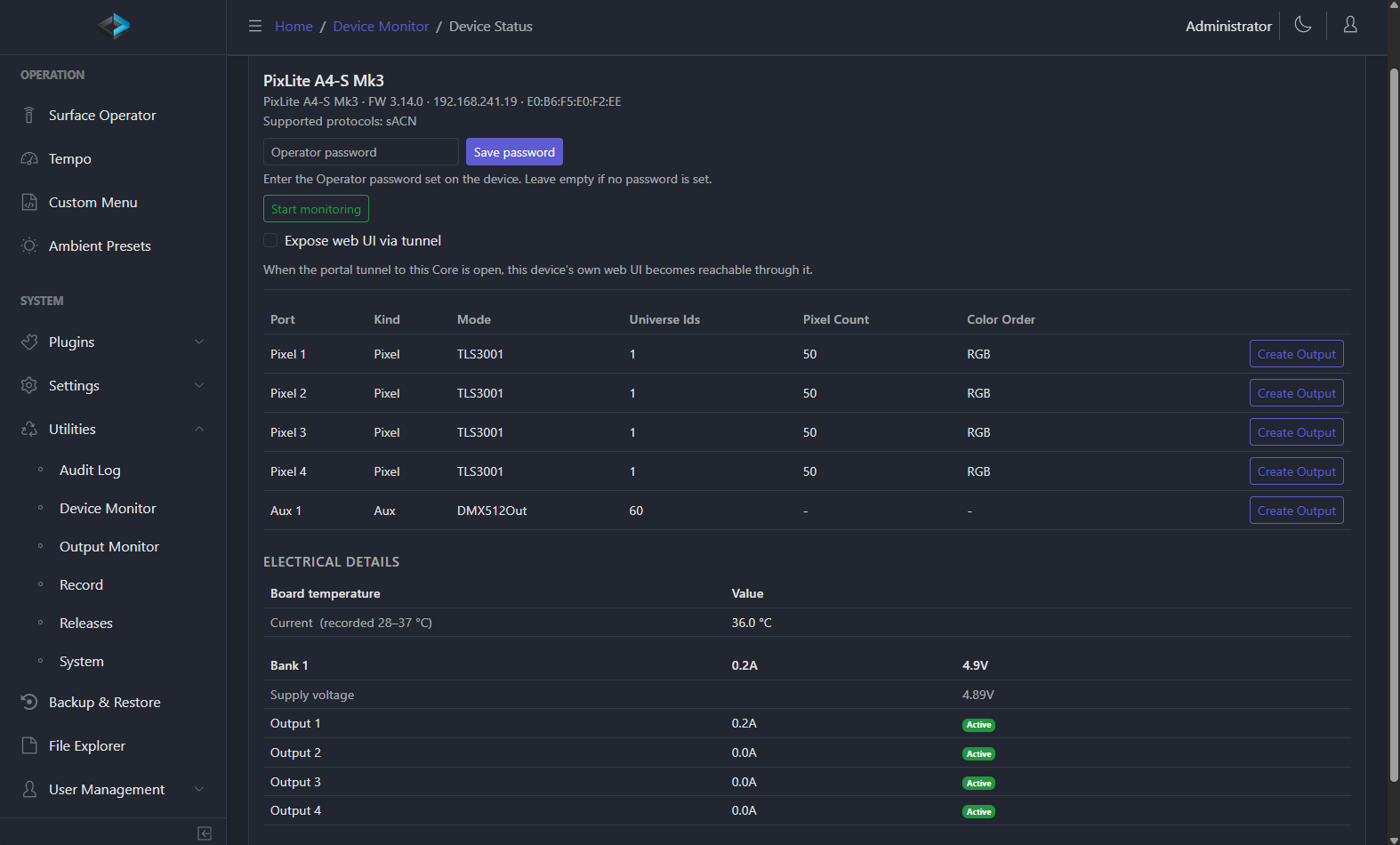
DMX Core 100 is a supported Advatek integration — see the Advatek integration guide. It auto-discovers PixLite® pixel controllers on the network, sets up Art-Net/sACN output to their pixel and auxiliary ports in one click, and monitors board temperature, supply voltage, and per-output current live — with drift detection that alerts you if firmware or port config changes unexpectedly.
Drive lighting from the same DSP that already runs the room's audio. Build custom control pages with buttons and sliders bound directly to DSP control IDs.
Trigger cues, presets, and timelines from a Q-SYS control system, and reflect lighting state back to Q-SYS touch panels. Ideal for conference centers, houses of worship, and multipurpose AV rooms where one Q-SYS core drives the whole experience.
Link DMX Core to Symetrix DSPs so a single control surface handles both audio and lighting. Map physical buttons and faders to DMX Core cues and zone levels for tightly integrated installs.
Give operators and end users tactile, screen-free ways to run the show — from wall keypads to buttons, sensors, and relays.
15 customizable LCD buttons for triggering cues, presets, and timelines, with toggle mode for on/off control. A fast, affordable operator panel for bars, studios, and small venues.
Wall-mounted 8-button keypad with LED indicators. Physical scene selection without exposing the full system — perfect for staff who just need to pick a look.
Add wired push buttons, sensors, and relay outputs over MQTT. Trigger playback from physical inputs, or drive indicator LEDs and relays from timelines and output events.
Connect MIDI controllers such as the Akai LPD8 for tactile, hands-on control of cues, presets, and levels.
Integrate with Shelly devices and any MQTT-based building automation. Fire input triggers from IoT events and publish output events to coordinate lighting with the rest of the building.
Bidirectional OSC control from TouchOSC or any OSC-capable device — build custom touch layouts that both trigger and reflect DMX Core state.
Beyond named partners, DMX Core speaks the protocols the industry runs on — so it works with far more hardware than any one list can name.
If you make lighting hardware, control systems, or AV products and want them to work with DMX Core, we'd love to talk.
Product names, logos, and brands are the property of their respective owners and are referenced here for identification and compatibility purposes only. Except where explicitly stated, a listing on this page does not imply any partnership, affiliation, sponsorship, or endorsement by the named company. The Advatek logo is used with permission. Several of these integrations were developed independently by DMX Core.