Record from the console you already use, then DMX Core runs the show on its own. Art-Net, sACN, and KiNet straight from your computer into any standard node, no vendor dongle required. Up to 800 universes. Windows, macOS, Linux, or dedicated touchscreen hardware.
Free demo, full features, no signup
Control, playback, scheduling, and integration in one program. The same software runs a nightclub, a house of worship, or a multi-site commercial deployment.
Configure fixtures, organize into zones, and build reusable presets. Real-time color, dimmer, and position control with instant visual feedback. Route a console’s sACN, Art-Net, or DMX-512 straight through to any output, merged with your own cues.
Record shows from external consoles. Build complex sequences with the visual timeline editor. Lock timelines to Art-Net timecode. Synchronize audio with lighting cues. Loop, fade, scrub, and trigger.
Schedule cues and presets by time, date, or sunset/sunrise. Trigger from HTTP, OSC, MQTT, TCP, UDP, or DMX thresholds. Fire output events to external systems - or script custom logic in JavaScript.
OSC, MQTT, REST API, MCP, Home Assistant, Q-SYS, Symetrix, Shelly, LIFX, WiZ, Govee, MIDI, Stream Deck, Key Digital keypads, and an Integration API for Bitfocus Companion and Crestron. Integrations are plugins you install in one click - or build yourself with the open SDK. Cloud tunnel for remote access.
Full browser-based control from any device on the network. Cloud tunnel for remote access from anywhere - no VPN or port forwarding required.
PIN or password authentication with 24 configurable permissions. Audit logging. Auto log-off. API tokens for external system integration. Custom branding per install.
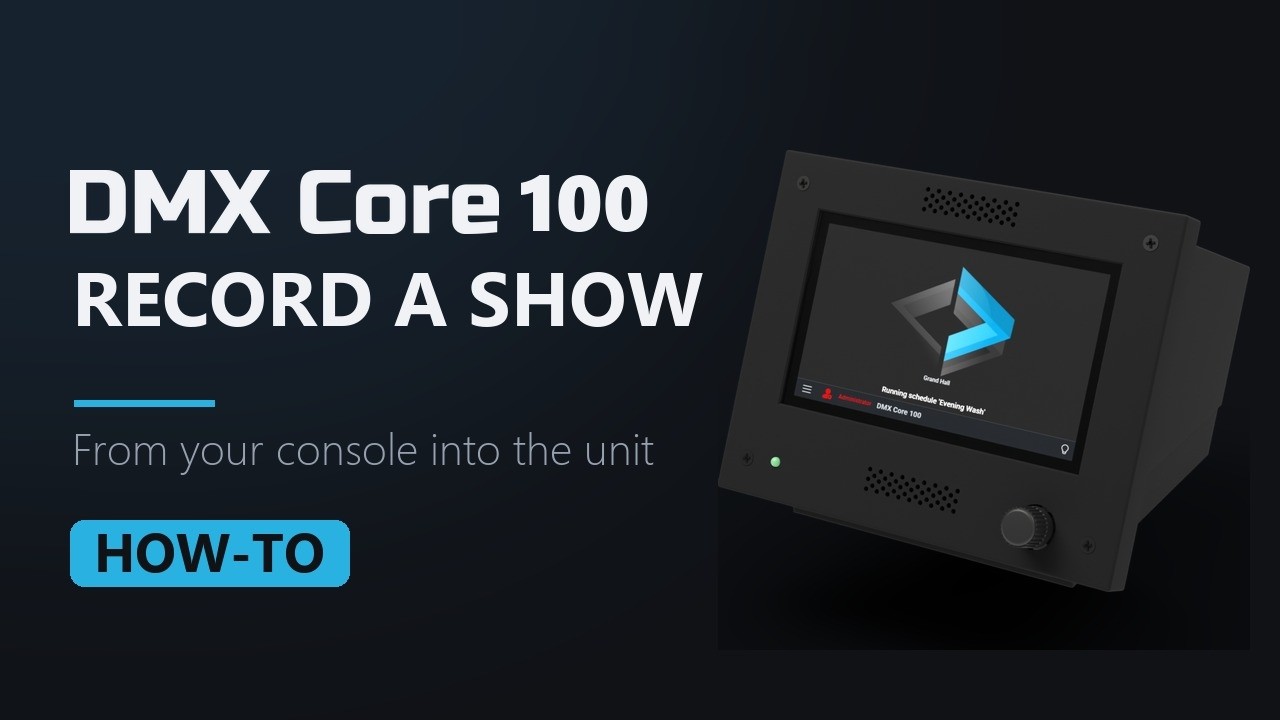
Program the show on any console that outputs sACN, Art-Net, or DMX-512. DMX Core records what the console sends, frame by frame, and saves it as a cue. From then on the cue runs from a schedule, a wall button, a Stream Deck, or an HTTP call, and the console is no longer needed on site.
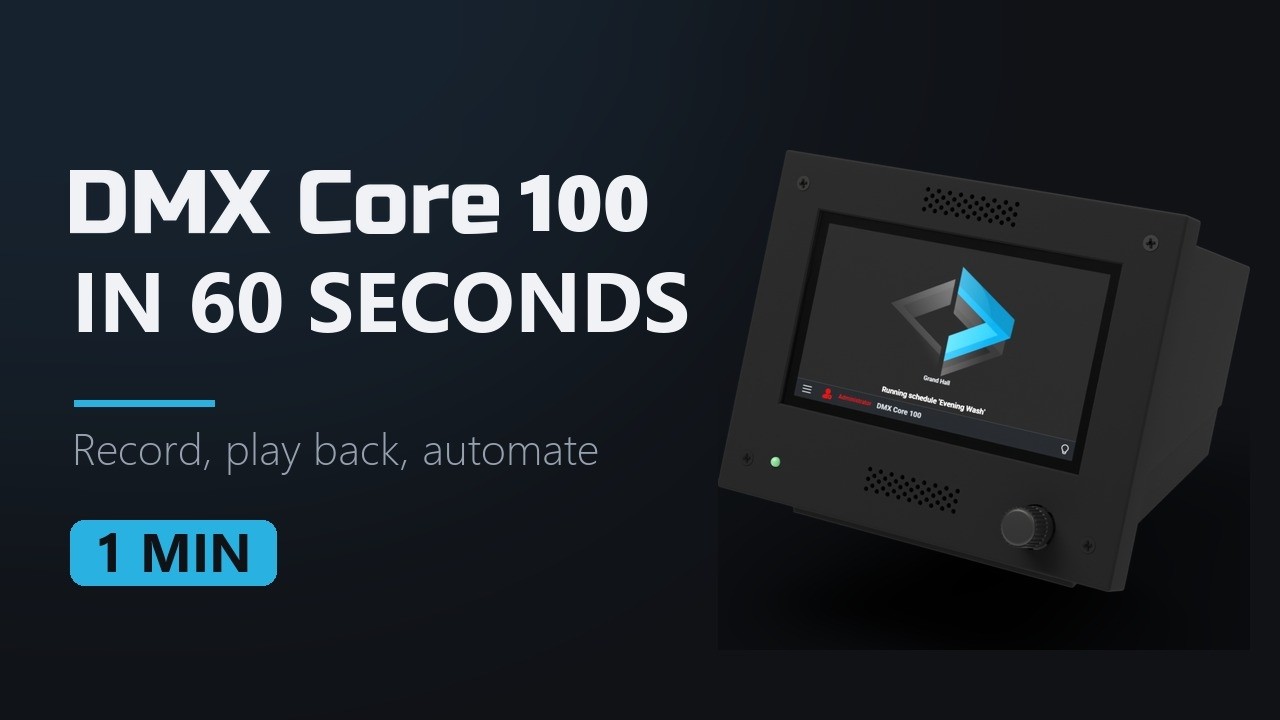
The video walks through the whole process on a DMX Core 100: map the input, point the console at the unit, record, save, and trigger.
Connect to your fixtures and systems however you need to.
Same software, multiple deployment options. Start with a desktop license and upgrade to dedicated hardware later - or the other way around.
Windows, macOS, Linux
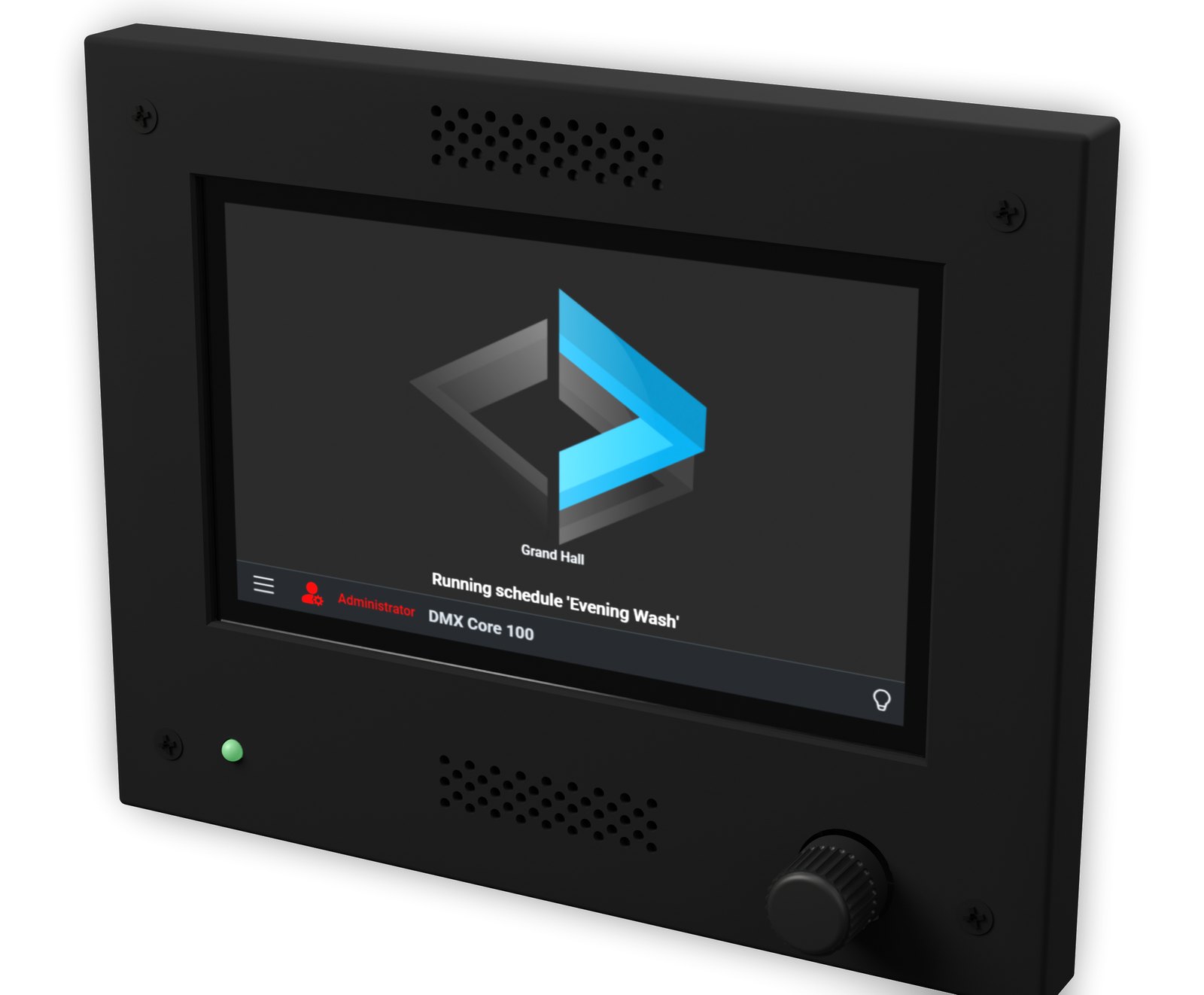
Touchscreen + rotary knob, PoE powered
Larger touchscreen, same capabilities
All prices set out or referred to on this page are recommended prices only, and there is no obligation to comply with the recommendation.
Professional DMX lighting control platform. Software for desktop or dedicated touchscreen hardware. Up to 800 universes on the $599 Full license, deep integration stack, scheduling, automation, and remote access.
Learn More
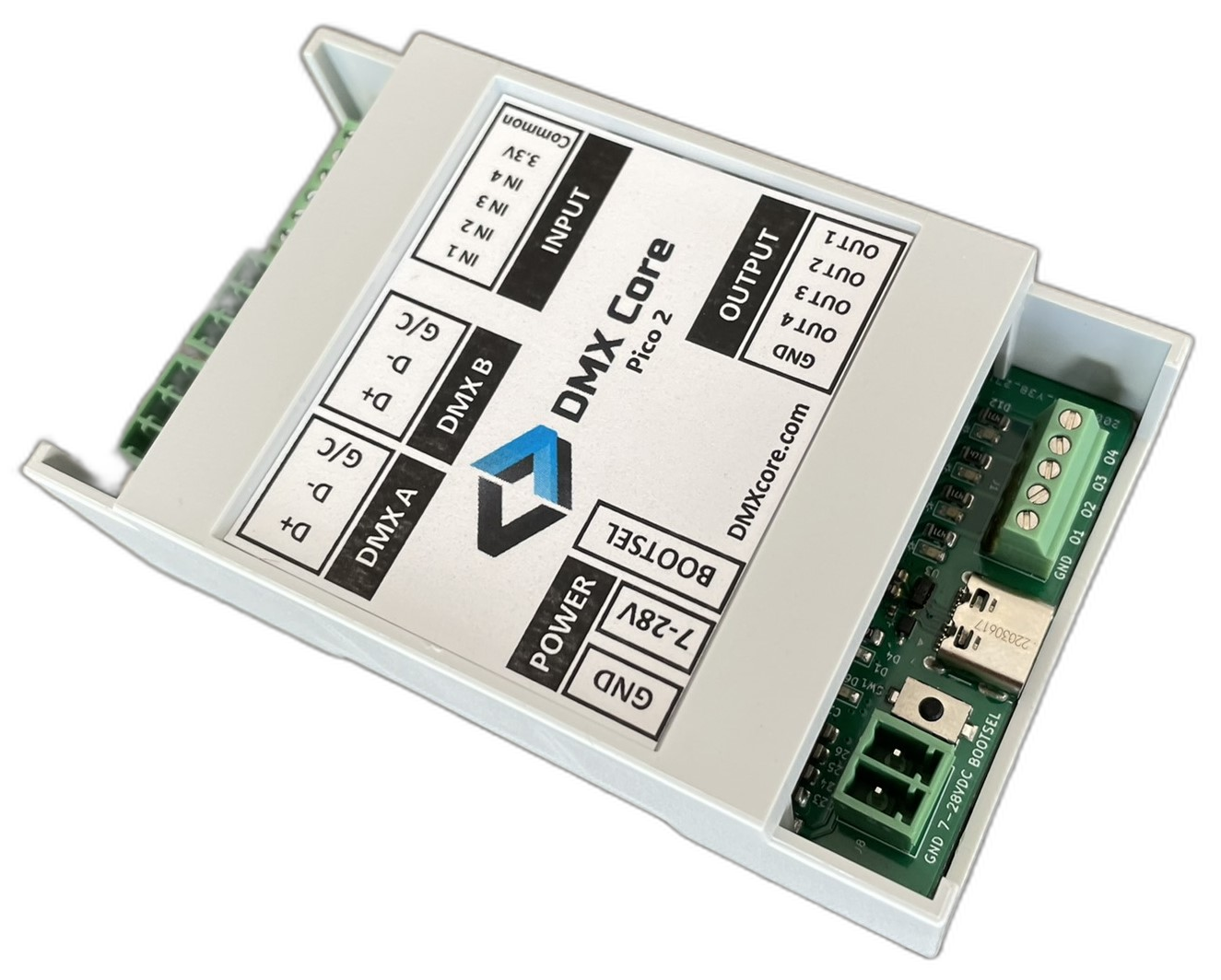
Raspberry Pi Pico-based controller with dual isolated DMX512 ports. User-programmable in C/C++, MicroPython, or CircuitPython. Also available as a DMX Re-Mapper ($149).
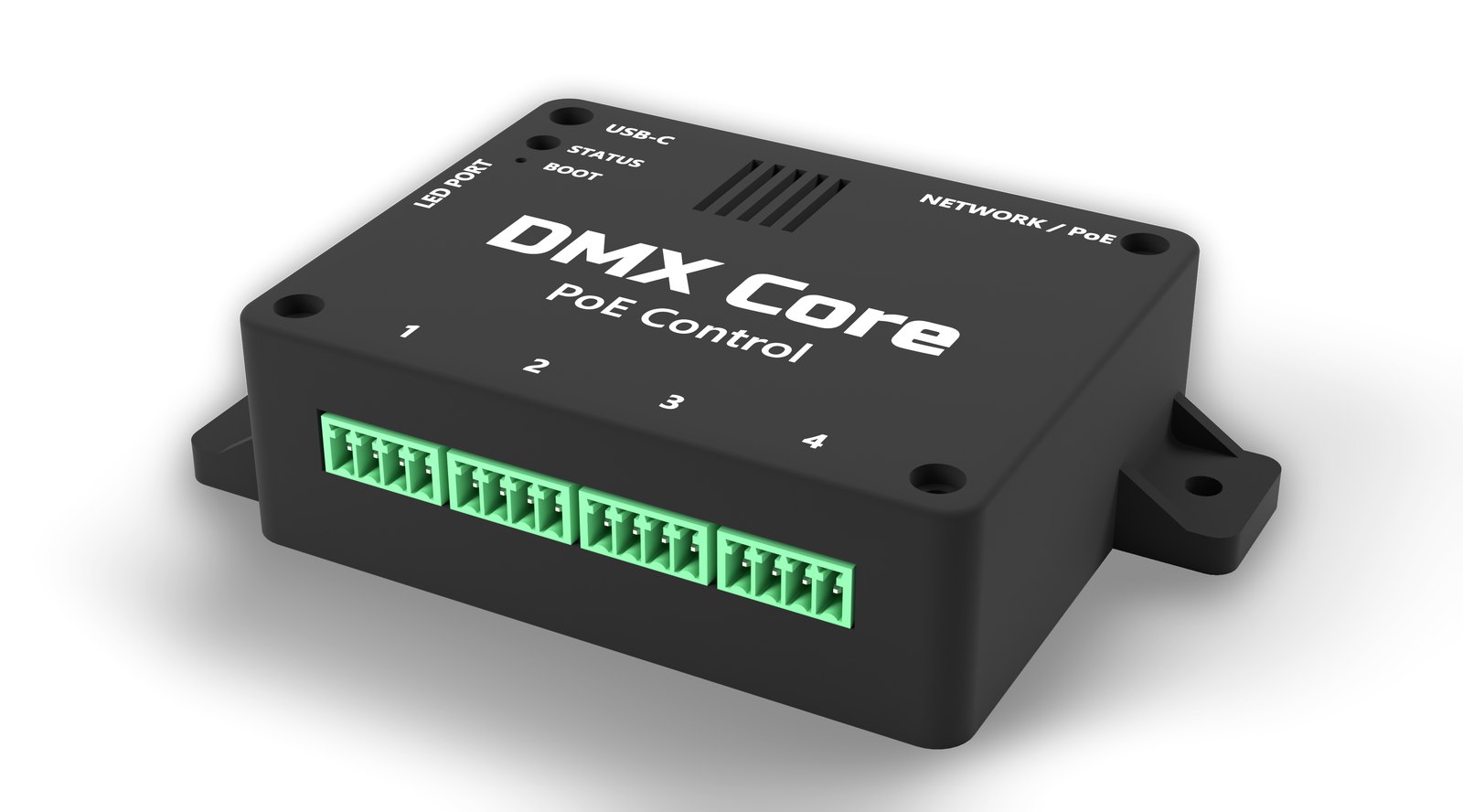
PoE-powered controller for wall knobs and buttons. Four control ports on one Ethernet cable, no programming. Drives a DMX Core 100, or a Symetrix or Q-SYS DSP directly. Rotary Encoder Kit $25.
From nightclubs to houses of worship, from AV integration to themed entertainment.
Cue record & playback, preset control, scheduled transitions for different times of night.
Zone-based control for dining, bar, and patio. Daypart scheduling. Staff-friendly presets.
Record a lighting designer's work, then let volunteers run it with simple presets and menus.
DMX Core is developed and sold by DMX Pro Sales in Austin, Texas. The company has been in business since 2015 and has been the US distributor for DMXking for more than ten years. We sold and supported DMX hardware for years before writing our own controller.
The software is written in-house, on 30 years of enterprise software architecture experience. Work on the DMX Core 100 codebase started in September 2022 and has not stopped since. The people who answer support are the people who write the code, so a bug report or a feature request goes to whoever can change it.
DMX Core exists because we wanted a controller for permanent installations that runs on an ordinary computer or a small touchscreen appliance, puts Art-Net, sACN, and KiNet on the network directly, records from whatever console the lighting designer brings, and takes commands from the rest of the AV system.
Explore the full feature set, compare with competitors, or get started with a software license today.